How a Piece of Lost Media from an 80s Adult Film is a Masterclass in Music Promotion (NSFW)

Music promotion on social media in 2024 is a full-time job. Spending your time researching social media trends, creating reels and posting carousels are all imperative for successful music promotion. The Plugged Into Music Fandom study by Wasserman estimated that income from social platforms such as TikTok, Facebook and Twitch accounted for between $0.8 and $1.2 billion in 2021 (Source: Midia), reflecting just how important social media is for musicians. So, releasing music today is just hours of creating social media content, pitching to Spotify editorial playlists, and radio plugging, right?

Well, it doesn’t always work that way.

On the 22nd of June 2024, Who’s Who and Christopher Saint released their debut album, Ulterior Motives (The Lost Album), on Spooked Media Releasing (Saint’s own record label) with little to no promotion on social media. In fact, Who’s Who don’t even have a social media account on Instagram or TikTok. However, the title track—a generic ’80s-sounding new wave number—has, at the time of writing, amassed over a million streams on Spotify. While this might not be groundbreaking for an established artist, for an unknown act self-releasing their debut in 2024? That’s huge.

So, how did they do it?

It was kind of an accident. Let’s back up a bit.

The Lost Track
The full story has already been covered multiple times, so we won’t go into the full details of what exactly transpired. If you want the full story, YouTuber Sully goes into detail here, but we’ll break it down briefly for you:

Before June 22, 2024, the only evidence of the track’s existence was a low-quality, 17-second snippet circulating on YouTube, Reddit, and a site called WatZatSong since 2021. This short clip was initially shared by Carl92 in an effort to find the original artist and the full song, claiming that the file was discovered on an old DVD backup with no information on the song’s title or its creator and featured heavy background noise (presumed by some to be Carl92 opening a packet of crisps).Original post on Watzatsong from Carl92 detailing the search for
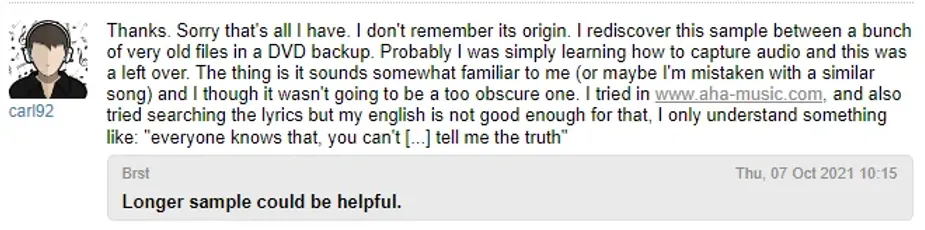
The clip went viral on YouTube and the r/lostmedia SubReddit with Redditors scrambling to find the song’s origin.

After many long hours of searching, one internet sleuth finally found the song’s title and the artist who recorded it; Ulterior Motives by Christopher and Philip Booth. However, he also revealed that the song was written and recorded as a soundtrack for Angels of Passion; an adult film from 1985.

It turns out that the 17-second clip that Carl92 shared was the only part of the song which didn’t feature other… erm… let’s say dialogue from the film. The background noise mentioned earlier was not in fact from a packet of crisps – it was the sound of bedsprings.

Naturally, everyone pretty much came to the conclusion that Carl92 found the song while watching the film and enjoyed it so much that he turned to the internet to find it. Obviously, he didn’t want anyone to find out that he’d heard it in a dirty movie, so in an attempt to hide this secret, he pretended that he found the clip on an old DVD backup. Carl92 has not been seen or heard from since, so we can’t know for sure.

Peace out meme.

As hilarious as it is that Carl92 was so enamoured by the infectious new wave vibe of this ’80s banger that he took to Reddit mid-stroke to attempt to discover its creator, we as musicians and music promoters should take this series of events seriously. We can learn a lot from the hype surrounding the record even if there was no intentional marketing (until one of the band members, Christopher Saint, found out about the cult following the song had achieved and began re-recording, releasing officially and promoting the song).

Let’s be clear – we’re not saying that recording a song for a dodgy movie will make it become viral. However, there are a few lessons to be learned from the unintentional promotion of the release that can’t be ignored.

1. The Power of Mystery and Intrigue

The dusty 17-second clip with the very little information delivered by Carl92 left fans desperate to figure out where the song came from. It offered fans a puzzle to solve, making them feel connected to the music as they searched for answers to the mystery. In fact, the armchair detective who eventually solved the mystery had to trawl through 12 hours of adult footage before eventually finding it on Angels of Passion. In the industry, that’s what we call a mega-fan.

Think about how you can use social media in a similar way. Using short-form content, you can easily create a sense of mystery for your releases. An example of this in full effect is this Instagram clip from the band Blossoms which features Rick Astley fervently asking the camera to help him locate “Gary” before a transition to the band’s music video. If that doesn’t leave you desperate to find out more, nothing will.

2. Target a Niche Audience

It’s unusual for a song to become popular on a subreddit, but the topic gathered momentum because the r/lostmedia fanbase (AKA the Lostwave community) are a small but enthusiastic crowd, intent on finding the origins of mysterious films, music, and memorabilia that have been lost to time. This is a reminder that it’s important to think about where your target audience is. Would your audience want to see funny 30-second clips of your band’s pre-gig shenanigans? Focus on Instagram or TikTok. Would they prefer to see you performing a live DJ in your kitchen at 3 am? Maybe YouTube or Facebook. Or, take inspiration directly and look for some very niche communities on Reddit that might enjoy your releases.

3. Deliver the Goods

Upon realising the cult following the 17-second clip had gained, Christopher Saint re-recorded and released the song since the original masters could not be found. Sure, the song is a fairly generic-sounding piece, but it’s a definite earworm dripping in nostalgia; a recipe for success in the Lostwave community. He knew exactly what the fan base was asking for and delivered a full album of ’80s adult-film bangers (no pun intended). Promotion is imperative as an artist, but you must ensure that you can deliver the goods at the end of it all. Make sure your songs are amazing, then put the effort into marketing them.

4. Memes

We’ve already discussed how memes are a powerful promotional tool for musicians, and though spending your time making them is probably not what you want to be doing as a musician, it definitely yields results. Ulterior Motives has not (yet) achieved meme status, but it’s still early days. There are already a few memes knocking around, creating more intrigue and indirectly promoting the song, and the subject matter is pure meme fodder.Lost media, Ulterior Motives, Everyone Knows That meme
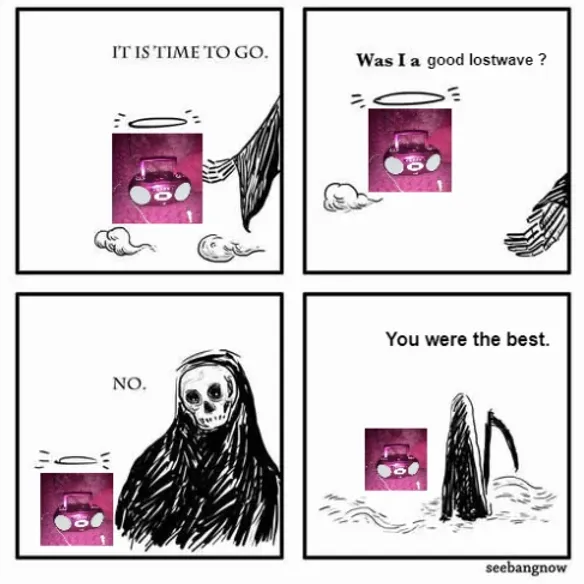
Check out how Dexter and the Moonrocks meme-ify their music, referring to it as “sad cowboy music” in this Instagram clip. Avoid becoming a meme entirely, but consider how you can use them to promote your music.

Final Thoughts

As social media becomes saturated with AI-generated content and influencer-driven trends dominating the space, it’s crucial to find ways to stand out. Promoting music in 2024 requires creativity, dedication, and a whole lot of hustle. But there’s also a fair bit of chance thrown in. Though we should always learn from other artists when we’re trying to promote our brand, sometimes, the best lessons in promotion can come from the unlikeliest of places – like an ’80s adult film.

While we wouldn’t suggest recording your music for an adult movie in hopes of it going viral, the story of Ulterior Motives shows how powerful it can be to generate intrigue while focusing on a clear target audience. Embrace these elements in your own music promotion and you just might find that success comes in the most unexpected ways.


Why Memes are Your Secret Weapon for Music Promo in 2024

Computer kid meme

Thinking of becoming a professional musician in 2024? Get ready to join a battlefield of artists fighting tooth and nail for relevance, streams, and attention. It’s not 2003 anymore. The music magazine is dead. Even music education magazines are going down, with three of the biggest guitar magazines recently announcing their closure. Even Facebook is becoming obsolete (though still a powerful tool for musicians, as we posted about here). You’ve got to hustle. You’ve got to find new ways to promote yourself.

Sure, advertising your music on the radio is still important, and if you can get your music on TV, that’s amazing. But we all know the best place to promote your music: the internet. And on the internet, you need to stand out. And to stand out, you need to be relevant. And to be relevant, you need to be part of the culture.

And that means memes. 

Trust us, memes are now the most effective and organic promotional tool for musicians. The impact of memes isn’t just about making people laugh; it’s about creating a viral buzz that gets your music into the ears and minds of listeners in ways that traditional marketing usually fails.

Let’s break down exactly why memes are the key to music promotion in 2024.

  1. Memes Are the New Word of Mouth

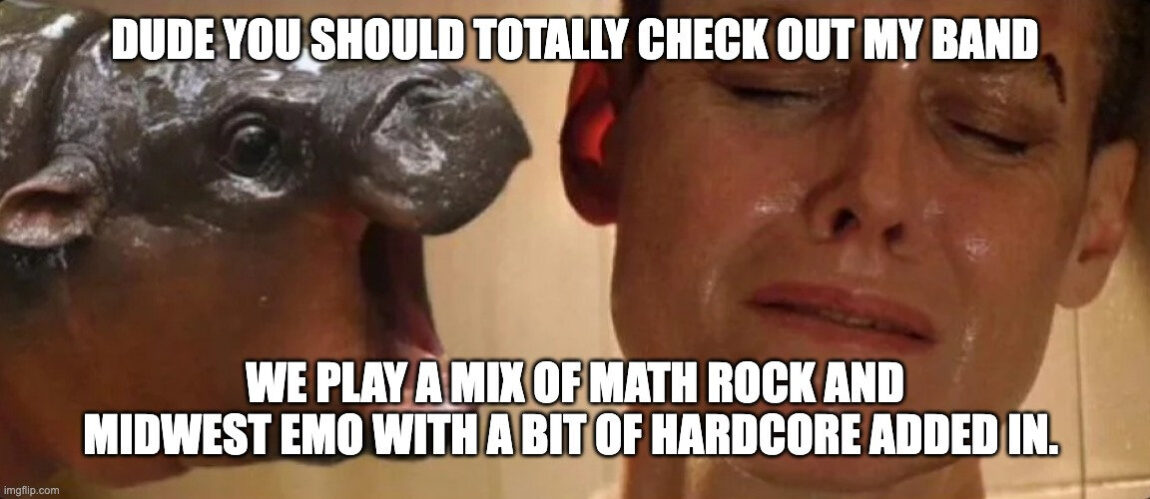
Math rock meme

It’s clear that memes are the internet’s answer to word-of-mouth marketing. Someone shares a meme, their followers laugh, and boom – your track is now part of the conversation. Whether it’s a funny moment from your music video or a meme about your band’s “ridiculous” style, memes allow your music to take on a life of its own.

Just to be clear – when we’re talking about memes, we are basically talking about any humorous trend that spreads over the internet. It’s hard to define exactly what a meme is, but it’s the kind of thing where you know one when you see one.

Let’s take a look at an example: The Pinegrove Shuffle.

The Pinegrove Shuffle was a TikTok trend that Garrett Lee started in June 2023. The formula was simple: an ironically brash, arm-swinging, leg-shuffling dance backed by the emo stylings of Pinegrove’s (at the time) fairly underground, emotional track “Need 2”.

It’s a recipe for an effective meme: Irony, humour, a lack of sincerity, and an opportunity to get involved.

It became huge. There’s even a video of DJ Khaled dancing along to the number. According to a Rolling Stone interview with Pinegrove’s frontman Evan Stephens Hall, the song had a 96% spike in streams, leading to the band re-releasing the song along with a sped-up and slowed-down version – perfect for reposting on social media.

Memes make your music more accessible, more relatable, and more shareable. They help you tap into a community of fans who get your vibe and are more than happy to spread it around. Got a unique dance to one of your own tracks? Start filming yourself or your friends doing the dance on TikTok. It could spread and get more ears on your music.

2. They’re Quick, Cheap, and Super Effective

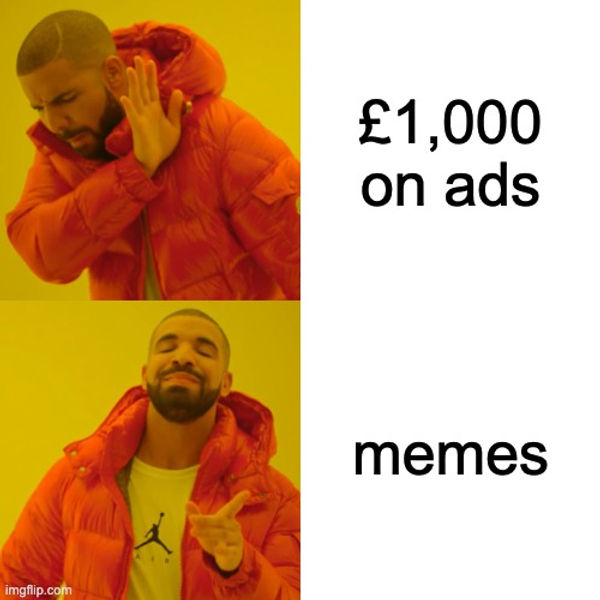
Music promo Drake meme

Not every musician has the budget to blow on huge advertising campaigns or flashy marketing strategies. But memes? They’re free. And the best part is, they don’t require an MBA in marketing to create. The genius of memes is that they’re often simple, user-generated, and quick to spread.

You don’t need a high-end production team to create a viral meme. It could be a behind-the-scenes clip from a studio session, something funny that you did on stage, or a snippet of a live performance that’s so good (or so bad) that people can’t help but share. Or, even better, just see which memes are being used right now and create your own version to post on your socials using this free meme generator.

You don’t even need to make a meme yourself – your fans can do the heavy lifting for you.

Take inspiration from artists like Lil Nas X. He has mastered the art of meme culture. Whether it’s creating absurdly shareable moments on TikTok or turning Twitter into a meme playground, Lil Nas X has become a meme creator as much as a musician. His ability to tap into meme culture has kept him at the top of the conversation.

  1. Memes Build Fan Engagement

Fans pun meme

When people engage with your music through memes, it’s not just a click or a casual listen. It’s a conversation. Fans love to be in on the joke, and they want to feel like they’re part of something bigger. Memes provide access to the inner workings of your brand – whether it’s an ongoing inside joke or a recurring meme format that fans can participate in.

Think about it this way: every time someone shares a meme related to your song, music video, or personality, they’re not just promoting your work. They’re telling their followers, “Hey, I get this. This is my thing now.” Memes build a sense of community – and when people feel connected to your brand, they’re more likely to support your music, buy tickets to your shows, or stream your album.

  1. Memes Create a Sense of FOMO

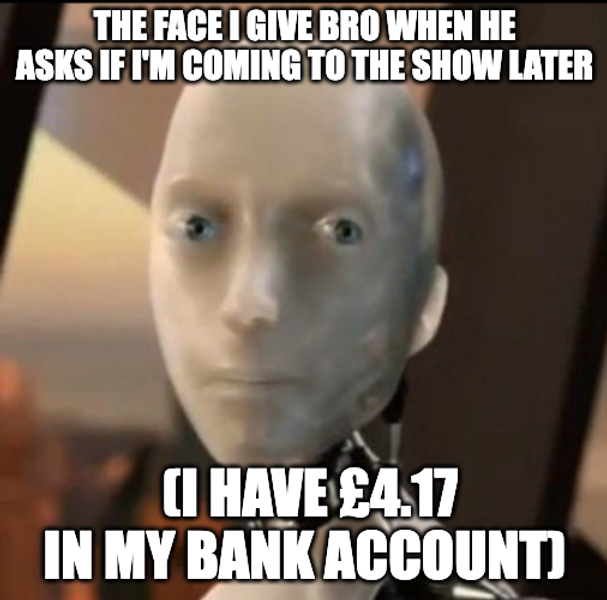
iRobot music promo meme

Memes are about one thing above all else: attention. The more people see your music being memed, the more they feel like they’re missing out if they haven’t listened yet. It’s the ultimate social media trick – memes create a cycle of “if you’re not in on this, you’re out.”

This fear of missing out (FOMO) is potent. When your song starts popping up in memes on TikTok, Instagram, and Twitter, it signals to potential listeners that your music is part of a larger cultural moment. Whether it’s a viral dance challenge or a witty meme based on your lyrics, FOMO drives curiosity. If people see others laughing or enjoying your content, they want in on the joke – and they’ll stream your music to catch up.

  1. Memes Humanise the Artist

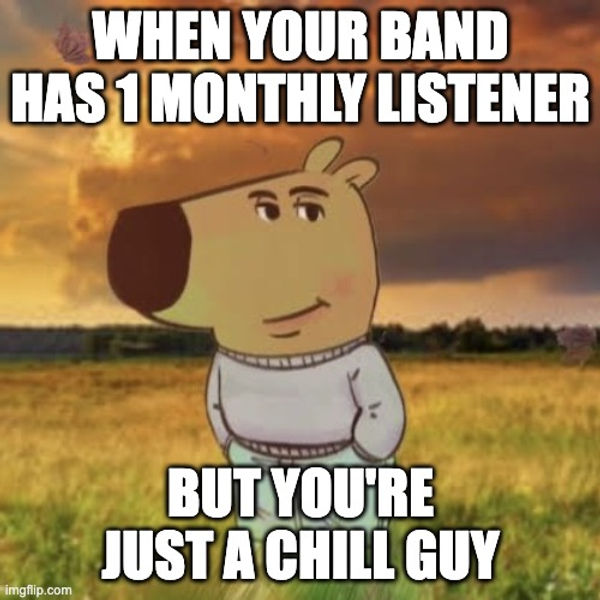
Music promo chill guy meme

Memes make you more relatable. They make you human. Musicians who lean into meme culture are seen as more approachable, more fun, and more “down to earth.” It’s easy to get lost in the polished, curated image of the modern pop star – but memes break that facade. They show the personality behind the music, and that’s something audiences crave in 2024.

When you create a meme or respond to a fan-made one, it’s like inviting your audience into your inner circle. It’s not about selling your music; it’s about creating a bond with your fans. And that connection? That’s what makes people want to follow you, listen to your album, and share your work.

Get in touch today to find out how we can promote your music even further through social media, radio plugs, and ads.

5 Reasons Why Facebook Is Still a Powerful Tool for Music Promotion on Social Media in 2024

In the ever-evolving landscape of social media, staying current is crucial for musicians wanting to amplify their reach. While platforms like TikTok and Instagram are becoming the first choice for many, Facebook almost feels like the “weird uncle” of social media, reminiscent of Myspace’s decline. However, Facebook remains a formidable tool for music promotion on social media in 2024. Here are five reasons why you should leverage this platform to elevate your music.

1. Effortless Event Promotion

One of Facebook’s standout features is its event promotion capability. Facebook events allow musicians to communicate directly with fans before and after gigs, creating a community around each performance. Fans can upload photos and videos, making the event memorable and interactive. While Instagram has introduced similar features, Facebook events have a long-standing reputation for effectiveness. If you’re planning a gig, don’t underestimate the power of a well-promoted Facebook event to boost attendance and engagement.

2. Clickable Links in Captions

For musicians, the ability to include clickable links in posts is invaluable. Unlike Instagram, which requires users to search for links in bios or external sites, Facebook allows you to place links directly in your captions. This means fans can quickly access your music on platforms like Spotify or YouTube, significantly increasing the likelihood of engagement. In an oversaturated music scene and with the attention spans of most social media users dwindling, this straightforward access is crucial for converting casual scrollers into dedicated listeners.

3. Cross-Posting

Managing multiple social media platforms can be overwhelming, but Meta makes it easier with its cross-posting feature. By allowing you to share content seamlessly between Facebook and Instagram, you can save time and effort while maintaining a consistent presence on both platforms. This means you can focus more on creating engaging events and community interaction on Facebook while reusing photos and videos from your Instagram feed.

4. Engaging the Older Generation

While your target audience may not be primarily 50 to 60-year-olds, don’t overlook the potential of this demographic when considering music promotion on social media. Older generations often have a strong appreciation for local, independent artists and can provide a loyal following. Additionally, many still value physical media—think CDs—making it worthwhile to engage with this audience. Even if streaming is dominant, a few CD sales can translate to immediate revenue, especially in local markets, which is vital for artists as streaming services pay so little.

5. Local Gig Promotion

Building a local fanbase remains vital for any artist, and Facebook excels in promoting local gigs. With countless local groups dedicated to community news, you can effectively reach people interested in supporting their local music scene. Posting in relevant groups in the weeks leading up to your gig, limiting to around five posts per day to avoid spamming, can help to create a buzz and is sure to sell a few extra tickets.

While Facebook may not be the trendiest platform in 2024, its extensive user base and unique features make it an essential tool for musicians. With over three billion monthly active users, as reported by Statista in July 2024, neglecting Facebook means missing out on a significant opportunity to connect with diverse demographics. So, whether you’re promoting events, sharing links, or building a local fanbase, don’t underestimate the power of Facebook in your promotional strategy.

If you’re looking to promote your music even further, get in touch to find out how we can optimise your music promotion on social media with Facebook and Instagram ads to help you boost your following, promote your tour and increase your Spotify streams.

Optimise Your Spotify Editorial Playlist Submission: 5 Essential Tips

Getting featured on the right Spotify playlist can be a game-changer for artists and bands looking to expand their fanbase. With the right approach, it’s an effective way to reach the right audience. Here are our top five tips to ensure your Spotify editorial playlist submission stands out and gets your music heard by the right ears.

1. Identify Your Niche

The key to landing a spot on an editorial playlist is specificity. Editorial playlists are categorised not just by genre but also by mood, instrumentation, and even the artist’s location. To determine the best fit for your song, start by identifying a few keywords that describe your track. For example, you might use terms like “instrumental lo-fi,” “Chinese flute,” or “progressive jazz metal.”

Next, consider other attributes that describe you as an artist/band, such as location, gender, and instrumentation. Compile a list of these keywords for reference in the next step.

2. Find the Perfect Playlist

With countless editorial playlists available, it can be daunting to know which to choose for your music. This is where the list of keywords comes into play. Enter each keyword into Spotify to discover relevant playlists, aiming for something specific and relevant to your song. With playlists like “Made in London” or “Café Africa” available, location can be highly important. Even gender can play a role; playlists like “Women in Jazz” may align well with your music. Once you find a selection of playlists, examine the other artists featured. It’s good practice to pitch to playlists that include artists at a similar level of monthly listeners to yours. 

One final tip: make sure you are looking for the right type of playlist. Be sure to check for the green Spotify logo in the byline next to the curator’s name. Avoid personalised playlists marked “Made for [your name]” as these aren’t suitable for submission.

3. Choose Your Most PlaylistableSong

Selecting the right song for submission is crucial. Again, think about the niche that your song fits into. The right song may not be the strongest you have, it may just suit a playlist more than your others. Focus on the one that’s most “playlistable.”

For instance, if you’re in a Japanese dream pop band, you may discover there isn’t a specific “Japanese Dream Pop” playlist to submit to. However, one track on your upcoming album is a chill, ambient instrumental track that is perfect for the “Ambient Japan” playlist – it’s the right niche and the other artists featured have a similar amount of monthly listeners to your band. Even though the playlist doesn’t suit the band specifically, that one dreamy ambient track is a perfect fit and, because of, this may have a much higher chance of getting playlisted than the other songs on the album. This method can also help you branch out and reach a wider audience.

Remember, if you’re releasing an album, you don’t need to pitch the singles; any track from your album can be submitted!

4. Submit at Least Four Weeks in Advance

While Spotify recommends a minimum of 7 days’ notice for Spotify editorial playlist submissions, we advise aiming for at least four weeks in advance. Curators receive hundreds of pitches daily, so giving them ample time to review your pitch is crucial.

Early submission also lets you strategise your release and consider promotional tactics to maximise your exposure.

5. Write an Engaging Pitch

This is where your writing skills come into play. Craft a concise and engaging pitch that incorporates 3 to 5 of the keywords you identified earlier. Most importantly, mention the specific playlist where you envision your song fitting. This helps curators understand your vision and the context of the music.

By following these five tips, you can significantly enhance your chances of getting featured on a Spotify editorial playlist. With the right preparation and approach, you’ll be on your way to reaching new audiences and growing your fanbase. Happy submitting!

Do Youtube Ads Really Help Promote Your Music?

2 billion users log into YouTube every single month. 694,000 hours of videos is streamed on YouTube every single minute. And guess the most viewed category on the whole platform? Music! Using YouTube to promote your music is a no-brainer. Not only is it a great platform for perfectly-crafted music videos or behind the scenes edits, but with YouTube Shorts, it’s now cornering the market of the shorter attention span. In fact, it’s starting to dominate it. YouTube Shorts receive around 50 billion views ever single day. Damn. That’s a big old audience awaiting your music.

There’s really no reason to be using YouTube to your advantage. And one way to do that? Running YouTube Ads. Running an ad campaign lets you show your music in videos on Youtube. Game changer, right?

So, do YouTube Ads actually help promote your music? Should independent musicians be paying to run campaigns on YouTube? Let’s get into it…

You’ll Reach A Much Wider Audience

Each day, 122 million people are consuming content on YouTube. As we said before, the majority of those users are letting YouTube algorithms dictate their daily soundtrack, as music is the most consumed content on the platform. So, the potential audience for your Youtube Ads is huge. In fact, it’s the biggest reach of all the social media platforms out there. Running a YouTube Ad campaign can put your music on the screens of people that never would have stumbled across your hard work before. The scope of your audience dramatically changes, in the best way possible.

But you have to do it right.

You Can Be Really, Really Specific

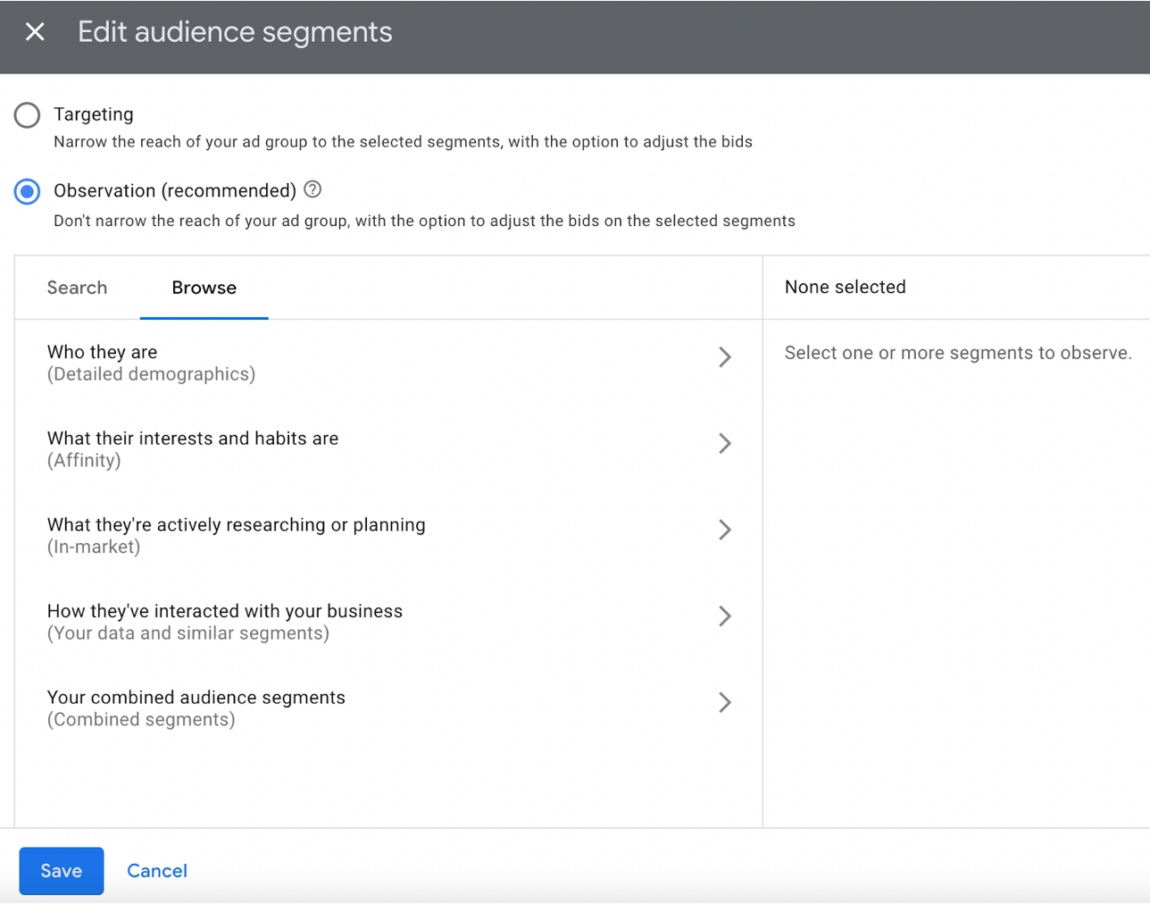
When running a YouTube Ad campaign, you can get seriously specific. By streamlining where your YouTube music ad is being directed, the chances of it making an impact sky rockets. When setting up your YouTube Ad campaign for your music, you will need to know exactly what demographic you want to reach. And Google goes into very specific detail. It’s intense, but incredibly worth it. In the end, when your music reaches those viewers, it’s highly likely you’ve gained a new fan.

Above is just one of the questions involved to narrow down what screens to target when promoting your music. With this kind of detail, it’s no surprise that YouTube Ads are 1.8 times more interacted with than other social media platforms.

It’s best to get an agency that can help…

PR agency that can help narrow it down and make it perfect to promote your song.

You Have Full Creative Freedom

When launching a YouTube ad, you have full creative freedom over what you put out there. I mean, within reason. If you’re swearing straight off the bat you’re not likely to reach many consumers. But, overall you can run any video you like in a music YouTube Ad campaign. Including, a music video.

“Effective ads give viewers a taste of your brand, product, or service — and that leaves a lot of room for creativity.”

YouTube suggest an A,B,C,D approach when creating an Ad:

  • Attract: Draw attention from the beginning.
  • Brand: Integrate your brand naturally.
  • Connect: Connect with emotion and storytelling.
  • Direct: Clearly state a call to action.

And yes, you can make a whole new video introducing yourself to the world. Fuse it together with your recent single and upcoming music video and you’re good to go. But, there’s no pressure too, either. The best part of this process is that you can throw out the music that you love, knowing that it will stick with your chosen demographic.

It’s Easy To Track, Measure and Tweak

Through your Youtube Ads account, it is easy to keep an eye on where your content is landing and who is vibing with it the most. As you monitor where your Youtube ad is making the most impact, it’s essential to keep the demographics you’re aiming for in line with what’s working. You can tweak your target audiences as your campaign runs to maximise the reach as much as you see fit. Or, you can leave it in the hands of the pros! As you well know, time is of the essence as a DIY musician. And if it all seems a bit time consuming, there are plenty of agencies that can take on the admin of running a campaign for you. At Decent, we can help you understand what the statistics are saying and take charge of the tweaks and maximise the most of your ad campaign. Check out our specialist Youtube Ad campaign plans here.

How To Use Social Media To Promote Your Music

Let’s be real. As a DIY musician, you know that the best way to get your music from your bedroom speakers to people’s headphones is through social media. We’re all on it. All the time. Platforms like TikTok, YouTube, and Instagram wield the power to shoot an independent artist to stardom overnight. To have a platform, you need to take your social media promotion seriously. Gone are the days of artist development, led by labels to nurture an artist from the ground up. Start a successful social media presence and the industry will meet you on the fifteenth floor. You’ve got to have a platform. But the good news? That’s totally attainable.

So, let’s get into it. Here’s our guide on how to get your socials started (don’t worry, it’s not as daunting as it may seem) and how to build a following hefty enough to get the industry’s attention:

Pick The Right Platforms

Firstly, it’s important to decide which social media platform is best for you to focus on. TikTok, Instagram, Youtube, Twitter, Facebook, Twitch, and Snapchat (it’s a long list… let’s leave it there) are all great, but they all offer a different target audience. Their purposes vary, so how much attention people spend on them does too. Let’s have a brief look into the three social media platforms that are the best for music social media marketing:

“Social Media puts the “public” into PR and the “market” into marketing. ” Chris Brogan, President of New Marketing Labs

Youtube
Many artists that dominate the airwaves found fame on YouTube. Back in 2008 when the social media platform was just a baby, Justin Beiber, Halsey, and Troye Sivan were discovered on here. Nowadays, it may seem like this market is much more saturated… and yes, around 2500 videos are uploaded every minute. But, songs are the most watched content on the website, and with the rise of YouTube Music, it’s much easier to be discovered. In addition, you can easily monetise your channel, you so can be financially rewarded for your hard work in real-time. We help to run YouTube Ad Campaigns, to check out more, head here: https://www.decentmusicpr.com/youtube-ads.

TikTok

Promoting your music on TikTok is incredibly efficient. The short-form nature of the platform means you can create lots of content from one music video, or recording session. It also allows musicians to connect to fans in a more personal way. It’s pretty standard to have talking videos or anecdotal content mixed in with the music-centered uploads. It’s much more personal than, say, Instagram. The ability to separate the ‘sound’ on the video (e.g. your amazing new release) allows others to use it too. Free promotion, anyone?

Instagram is all about the aesthetic. It’s the perfect place to build your brand, and when it comes to marketing your music on social media, Instagram is where you can really build a buzz. The behind the scenes pictures, the teasers of upcoming tracks, the press shots, the artworks… all of them deserve a spot on your grid. Instagram encourages a loyal and longterm fanbase, that will actually engage with your well-curated content. As opposed to TikTok, which throws your content out to as many people as

Be Authentic… Be You!

The great thing about social media marketing is that you can truly be yourself. The consumer wants to get to know the artist behind the art. Not only does it create a deeper connection with the music, but fans can feel directly connected to the artist, too. TikTok and Instagram are the go-to’s for this. What other hobbies go alongside the music you’re making? What other sides of yourself are you happy to share with your newfound fans (friends)? Being yourself helps keep it real. And there’s nothing worse than a social media presence feeling like a fake persona. It’s too transparent. It won’t last long.

“Being yourself is the only way how to stand out in today’s crowded market. So what’s YOUR story?” Magnetic Silvia, CEO of Magnetic Look

Find Your Target Audience

Don’t be afraid to do some market research to get your head around this one. Look at artists who you aspire to or bands that are working in the same genre as you – what sort of content are they posting? What hashtags are they adding to their captions? Obviously, we are not saying to copy and paste social media strategies from other artists. But, to begin with there’s no harm in seeing what sort of content your target audience is responding to. You’ll then know who you’re trying to connect with and how to make that connection.

Bonus Tip: Community engagement is an essential part of the social media marketing of your music! Reply to your comments, like your follower’s stories, and share other’s work. Be part of the community that’s forming around your music.

Oh, and tag everyone who’s in your pics. The studio, the other artists, the photographer, heck, even the people in the crowd if you know them! They’re likely to share it to their profiles and there you have it, a boost in followers and exposure from just one post.

Create Great Content

Different platforms demand different amounts of effort. Creating great visual content will immediately put you in a better position to build a healthy following. Social media marketing is… well, marketing. So you want to make sure what you’re putting out into the digital world is the best that it can be. Repurposing content is also a great way to get good content on the fly. Have a music video out? Create as many clips as it can be cut into and there you have it, a month’s worth of TikTok posts. Did a show last week at your local pub? Chop the vids up and you have loads of reel-worthy content for Instagram with a lot of people to tag and promote you. Sorted.

Use A Content Scheduler

Once you’ve made all that content from your recent music video… schedule it! Uploading your content onto a scheduler is a surefire way to make sure you’re keeping up with the posting. It’s easy to forget to do, life always gets in the way. But by using a scheduler you can upload all in one go and forget about it. Then all you have to keep up with is engaging with the reaction from your fans. Here are some great free schedulers to try:

  • Later
  • Buffer
  • Planable
  • Facebook’s Meta Business Suite Scheduler: You have to go into your Facebook account for this one, but, trust us, it’s great. You can post every type of content with no extra fees and links straight to your Instagram.

Happy posting!

One thing to remember when promoting your music on social media is to not overthink it. Yep, we know… seems pretty counterintuitive after all these tips. But, being yourself and posting what you find interesting, engaging, and creative is the best way to stay motivated and committed to your music’s social media marketing strategy. Once you’ve got all these set up, remember to include them in your Electronic Press Kit and even do some paid promotion with the platforms themselves.

Remember, you’ve already done the hard part. You’ve made the music. Promoting your music on social media is an exciting opportunity to get it out there. So, get posting.

How To Get Featured On Your Favourite Music Blog

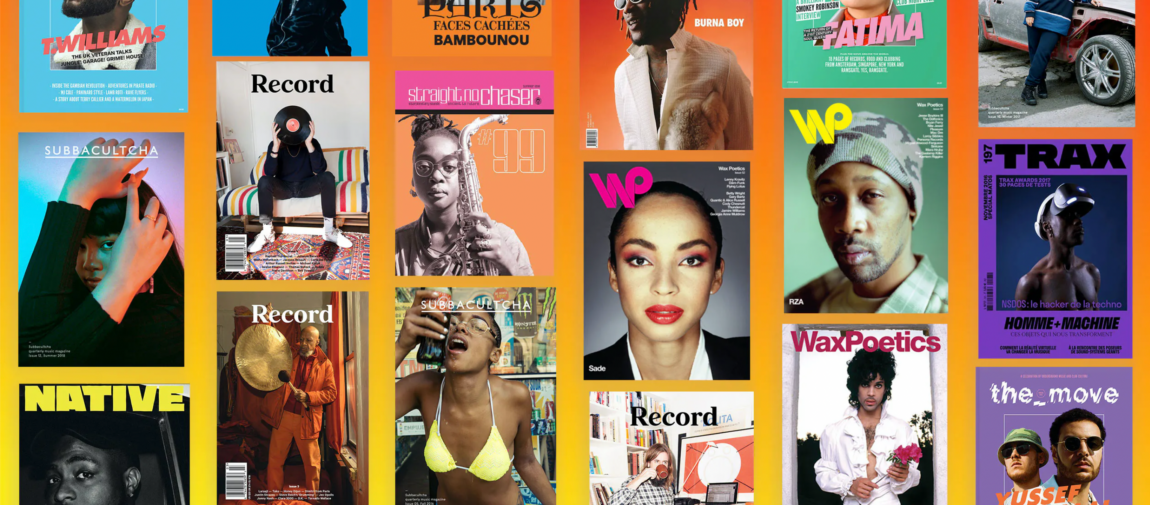
Collage of magazine covers featuring diverse artists, musicians, and cultural figures, including publications like Wax Poetics, Record, The Move, and Subbacultcha, against a gradient orange and yellow background.

Getting your face featured in your favourite music mag is a two-fold process. You need to craft the perfect press release and write a punchy pitch. Then, you need to find out where to pitch it. The latter takes a level of persistence and commitment that only a DIY musician on a mission to make it could muster. It takes trawling the internet for the right contacts and submission forms with potentially not much return. But, when it does pay off, boy, does it feel great.

perfect press release

Luckily, there are plenty of online music publications, journalists, and music blogs that want to hear your music. And, if it’s up to scratch, will feature it on their platform. So, how do you get heard by the right ears?

Make Sure Your Pitch Is Up To Scratch

We have a guide to penning the perfect press release to get you prepared for this moment. Make sure all your information, including links to profiles, streaming statistics, and show dates, are completely fresh and up to date. Remember to keep it concise, especially if you’re submitting through a form on the blog’s site. Another great link to include is your EPK. Find out how and why these are so crucial in our guide to building one here. Once you’ve got that sorted, let’s get into how to pitch that press release to the right people…

Identify Your Hit List

The first thing to think about is: where you want your music to be featured? Now, I know the first thing that came to mind was NME, Rolling Stone, and Billboard. Hell yeah, in the end, the goal is to get you there. But, whilst you’re DIYing your music marketing, you’ve got to be a bit more realistic. Doing some research into smaller blogs or freelance writers that specialize in your genre is a great place to start. In the long run, getting the ball running with coverage in smaller music publications will eventually lead to the bigger ones. We’ve included some with genre niches down below to get the ball rolling for you…

Be Specific

Get personal! If you can find the music editor’s name, use it. The recipient is way more likely to keep reading if you’re directly addressing them. It’s not too hard to find out who the music editor is. Usually, on the site itself, there should be a list of contacts. If not, LinkedIn will be your best friend. Searching the employees of the magazine will quickly reveal who will be opening your press release. One sure thing to avoid? The mass email. There is no CCing or BCCing in this game. It might save you time, but it won’t help persuade the publication or journalist that you’re a good fit for them. In fact, it will most likely do the opposite. So, get digging, get personal, and get yourself of cup of tea… you’ll be there a while.

Person wearing a brown sweater typing on a laptop, with a notebook and a mug of coffee placed on a desk near a window.

Know Who You’re Emailing

Now you have got the the right email, it’s important to do your background research. An endless tide of press releases flow into a journalist’s inbox each week. Even higher numbers wash through the submission forms of online publications. So, butter them up! Commenting on a journalist’s recent piece that caught your attention will up your chances of the writer reading on. Following their socials and finding out more about their interests and audiences will give you more of insight on how to pitch. At the end of the day, we’re all human. In the digital world in which DIY marketing operates, genuine connection can be lost. So, be human. Be genuine. Have more to mention than what they can do for you.

Top Tip: Get ahead of the game! Even before you have a new track to pitch, find the freelancers who are writing in your genres and follow them! Starting a dialogue before you hit them up asking for a feature will hugely work in your favour. Even if that dialogue is liking and commenting on posts or sharing pieces on your socials. Being a recognisable name, rather than just another press release clogging up the inbox, will help you massively in getting the publicity your music deserves.

Follow ALL The Guidelines

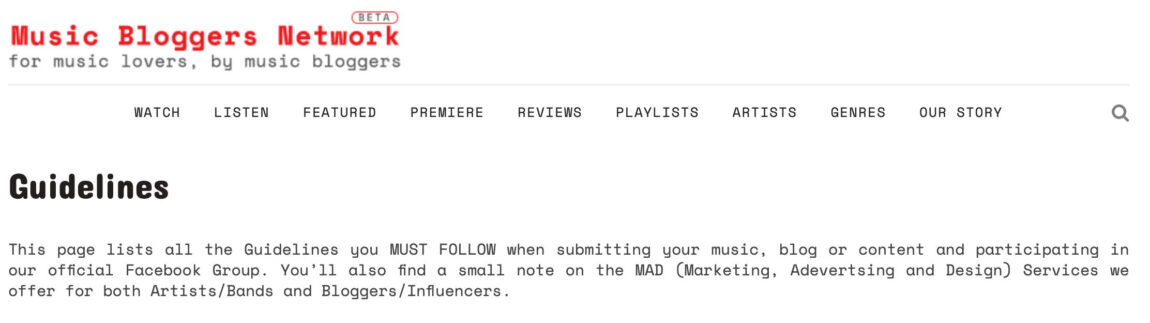
If you’re not emailing a select person or email, you’ll be submitting through a website submission portal. They’re very common and a bit easier than scouring the internet for the correct editor or journalist to contact. However, every single submission portal on a music magazine or blog will have different guidelines. It’s vital to thoroughly read through and understand what the different blogs are asking for and stick to it. If you don’t, the likelihood of them even listening to your music is pretty slim. Don’t rush your submission, better to get it right the first time than to confuse them with re-dos!


Screenshot of the Music Bloggers Network guidelines page, detailing submission rules for music, blogs, and content, along with a note about their marketing, advertising, and design services for artists, bands, and bloggers.
^Screenshot of Music Bloggers Network – Click Image For Link To Submission Page^

So, now you should have a sense of how to get your press release over to the right people. Here is a starting off list for great publications to submit your music too. It’s a mix of emails and submission portals, so you can get used to both:

Pigeons & Planes

Genres: All

Pigeons & Planes is part of COMPLEX media and is a “music discovery” site for all genres of music. It features underground and independent music as well as the chart toppers.

How To Submit: submissions@pigeonsandplanes.com

The Line Of Best Fit

Having been around for over a decade, The Line Of Best Fit is a renowned publication. Their playlist Spotify New Music Discovery is a huge selling point of landing a feature here too.

How To Submit: https://www.thelineofbestfit.com/contact

Indie88

Genre: Indie

As the name suggest, this publication talks everything indie! So, if that’s your style then you should be submitting to these guys. They also boast an internet radio station that streams curated playlists of indie tunes.

How To Submit: https://indie88.com/submit-your-music/

Acid Stag

Genre: Electronic

This Australian based music blog covers electronica, disco, house, funk, DnB, electro-RnB. Everything produced, basically.

How To Submit: https://acidstag.com/about/

Electronica UK

Genres: Electronic, Experimental

This publication doesn’t do anything too “commercial sounding”. To quote them, “We aim to share some great tunes, from both established and underground artists, to help connect music to ears.” So, whatever that means, I guess?

How To Submit: https://electronica.org.uk/submissions/

The Alternative

Genres: All Genres

The Alternative does exactly what it says on the tin. Anything alternative! They “only publish music they find that truly sounds great”. Quite a broad range, so worth a submission.

How To Submit: TheAltSubmissions@gmail.com.

Folk Radio

Genres: Indie

Folk Radio’s music coverage is non-mainstream and eclectic… It’s main genres are rooted in the indie and folk landscapes, but they touch on anything that is off the wall mainstream, experimental and underground sounds.

How To Submit: submissions@folkradio.co.uk

How To Write A Winning Music Press Release

You’ve done the hard graft. You’re re-mixed and mastered your single every other day and now you have it perfect. The tune is finally ready to go. You’ve uploaded it onto DistroKid and have your release date. What is next? The press release.

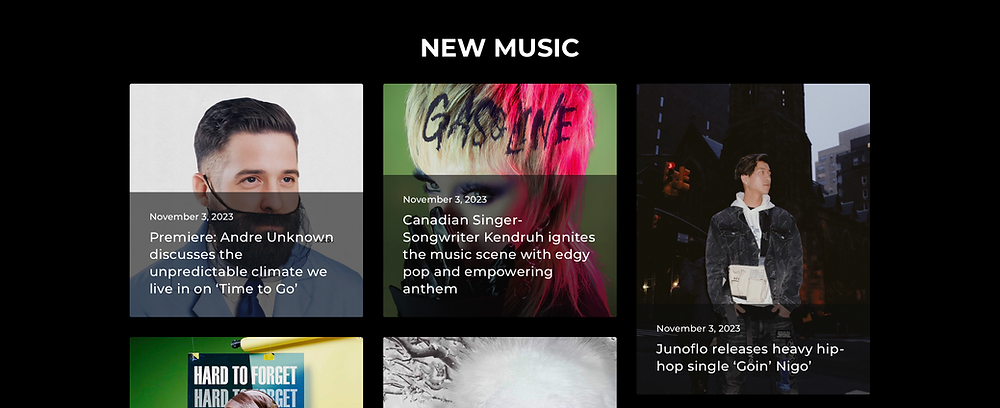
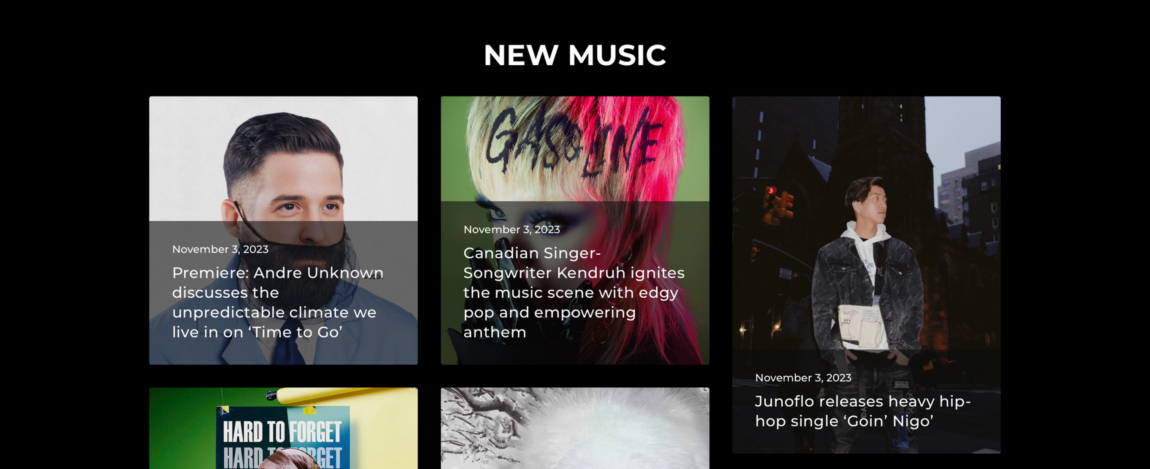
As an independent, DIY musician you are most likely used to getting your hands dirty and managing some of the PR on your own. Music press release distribution is no different. Writing a press release is a crucial step in marketing for any single and album release, announcing tour dates, or distributing your new music video. It’s your gateway into more publicity on music blogs and magazines. So, how do you write a music press release? And how do you make it hit the mark and get the publicity your perfectly mixed track deserves?Grid of new music releases featuring Andre Unknown’s premiere, Canadian singer-songwriter Kendruh’s empowering anthem, and Junoflo’s hip-hop single ‘Goin’ Nigo,’ displayed with vibrant cover art and release dates.

What Is A Press Release?

First things first, you’ve got to get to grips with what a press release actually is. In a nutshell, an independent press release is a cheat sheet pitch that’s going to grab the media’s attention. You’ll send it to music bloggers, journalists, and magazines and, if you craft the perfect press release, you’ll find yourself a spot in their music news. So, what actually is included in an eye-catching press release? We got you.

1. Headlines and Headings:

What single or album are you promoting? How can you make it catchy? Get a good headline right from the get-go of your independent press release and your readers are more likely to keep reading. We all want our job to be a bit easier. Helping the journalist in and include a tagline they can utilise when writing up a piece. It also helps section out your press release so your reader knows where to look for the right information.

2. Artwork and Press Images:

You want your face in the media, right? Including the album artwork is wildly important. How are the readers of the music publication going to recognise you when they search for your track? Include press shots. But, not all of them. Bombarding your pitch with the whole Google Drive from your photo shoot may feel like a great idea. Giving them options, right? Wrong. Making the journalist’s life easier is going to increase the likelihood of getting on the publication and giving them a hundred shots (no matter how great they are) to sift through isn’t going to help. Pick your favourites and the ones that suit the specific track and include them.

3. Quotations:

What other respected music outlets have mentioned you? It’s all about the clout. It’s okay if you’re not quite at this point yet. You gotta start climbing the press ladder from the bottom rung up and that’s okay. Even if it’s a more lowkey publication or the promotor from your recent gig, it’s important to include some quotes from music industry individuals to get the ball rolling. If you’re at a stage where you’ve had quite a lot of press, there’s no point in including them all in your press release. Look at the magazine or journalist that you’re pitching to and include the reviews from similar publications. It’s going to help them see you in context with their readers and the aesthetic of their site. But, if you’ve been featured in, say, NME? Forget all the rules and shove that right on there… in bold, and maybe caps… congratulations, you independent music press release wiz.

4. The Five W’s: Who, what, when, where, why?

This may seem like the boring facts. But they’re important! You want the right credits and information when you find yourself a feature. So, who’s in the band? What is it (a tour, single, album, new singing)? Where is the event or single being launched? When is it happening? Why has it come about? The why may seem vague but it’s crucial. We get to that a bit more down below.

5. External Links:

We’re talking about your Instagram, Twitter (sorry… X) Youtube, Website… whatever you got, get it on there. Journalists will most likely copy and paste this into the piece so make sure it’s correct. It could be a general LinkTree, or might look something like this:

Facebook | Instagram | Website

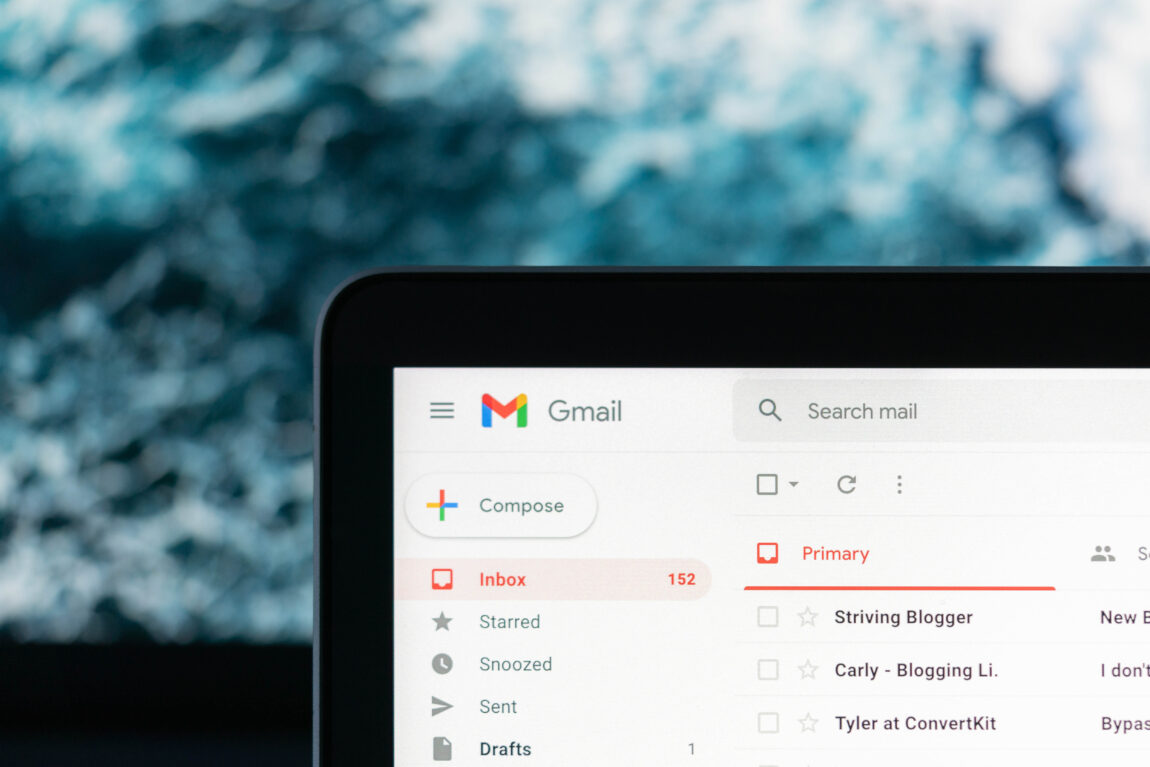
Close-up of a Gmail inbox on a laptop screen, showing 152 unread emails in the Primary tab, with a blurred blue background.

You’ve Got The Basics… Now, Stand Out!

So, that’s the general gist. Press releases are used in every avenue of the PR industry, so you better believe that writers are used to receiving a lot of them every day. How can you make your independent press release stand out and gain the right kind of attention?

Get Straight To The Point

Journalists will have a wave of press releases wash over their inbox each week. They will be skimming over all the waffle. If there’s too much, it’s more than likely they won’t be delving into the details altogether. Getting straight to the point ups your chances of having your music heard tenfold. Be concise, be engaging and your music is more likely to be heard.

No Attachments!

Including attachments might feel easier… “see attached PDF for the full press release” seems like a sensible way to start music press release distribution. However, as a foreign email address, adding attachments increases the likelihood you’ll end up in the ‘spam’ or ‘suspicious’ segments of the receptor’s email algorithm. To begin with, get it all in the content of the email. Once you’ve emailed back and forth, sending an attachment won’t be such risky business.

Add A Personal Touch

There’s one thing that makes you stand out. Your story. We all have one, and, as a creative and independent musician busting their arse to get out there, yours is probably very interesting. Adding a personal narrative or explaining the back story of the song/album is going to add a layer of intrigue, personality, and engagement. As we said before, keep it sort of brief. You don’t want the skippable waffle. But you do want to help build a storyline for the journalist to bounce off.

What’s Next?

Now that you’ve got your perfectly crafted press release. It’s time to pitch. Sourcing the contacts of blog writers, journalists or magazine editors can be a long and, quite frankly, boring process. But, it’s a feat worth doing. If you want to skip that part of the process, independent PR companies will create and distribute your press release for you. They’re more likely to get it to the right people through their extensive contacts and know-how. But, that doesn’t mean you can’t give it a crack yourself. See our blog post on how to pitch your press release to publications to start your pitching journey.

How To Get Your Song On The Radio

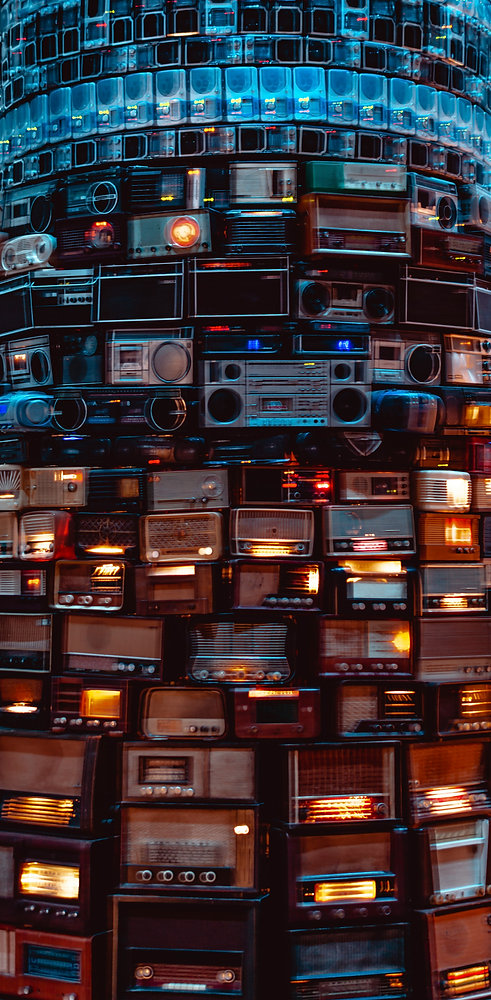
A vibrant wall of vintage radios stacked in a mosaic pattern, featuring various styles, sizes, and glowing dials, creating a retro aesthetic.

How we discover, enjoy and share music has changed hugely in recent years. Spotify, and Apple Music, along with the rise of social media sounds and TikTok trends have allowed us to have millions of tunes in the palms of our hands… twenty-four hours a day. Which is, quite frankly, a touch of heaven for us music lovers out there. However, whilst securing a spot on a coveted Spotify playlist or starting a trend that sweeps through TikTok with your catchy chorus may seem like the golden ticket, there’s one side of digital music promotion that we absolutely shouldn’t forget – radio plugging. Yes, we’re talking about the good, old-fashioned radio.

Is Radio Still Relevant? We’re Not Gaga About It Anymore…

Radio plugging services may not be at the top of your list when choosing which music PR agency to go with. And that’s understandable. But it is, perhaps, a bit short-sighted. From July to September this year (the last quarter), 49.5 million adults (that’s 88% of adults) listened to their radio every single week. That tots up to 1.016 billion hours of radio consumption happening all over the country, all of the time. Each of these Radioheads is racking up 20.5 hours of radio play per week. See? Radio is still so very, very relevant.

Okay, people are plugged in. But why is plugging your song to radios important?

If we consider the statistics mentioned above as real life scenarios, then the importance of radio plugging becomes pretty clear. Those 20.5 hours a week? Who’s to say that that’s just one person discovering new music through the airwaves? There could be five people all vibing to the same station in the car, or around the breakfast table, or in the office. That’s five people listening to 20ish hours of radio streaming. One radio play could be a whole new host of fans. The scope for reaching new audiences is huge. And, arguably, better than one new listener hastily shuffling through their Discover Weekly playlist.

What else is forgotten when we neglect radio plugging is the art of passive listening. On Spotify, most listeners are active; skipping through, searching for songs, forming playlists. What radio perfects is the joy of passive listening. We’ve all had those songs that weren’t love at first listen, but over time we found ourselves gravitating to it and searching it for specific moments. Out of nowhere, it’s on heavy rotation. Getting your tune played on the right radio station means becoming that earwig people grow to love. There’s no skipping. There’s no Discover playlist that changed daily and will be forgotten tomorrow. Listeners get to hear your track time and time again. In its’ entirety. You become the soundtrack.

So, How Do You Get Your Music On The Radio?

  • Pick Your Best Track.

Choosing the perfect song to submit to radio stations is crucial to having success. Think wide mass appeal, catchy chorus or hook, strong musical identity and/or message. Another key thing to consider here is respecting the radio formats. Anywhere between 2-4 minutes is your golden ratio; anything less or more, forget about it. Avoid explicit lyrics or extremely controversial statements. Yes, art is all about expression and risk. No, radios won’t play it on repeat in prime family listening. Radio edits are a thing for a reason and we suggest mixing one together if you want a shot at getting on the airwaves. Most likely, the track you’re choosing is the one we’re working on your campaign with you. Or, if we’re promoting your album, we can help you pick out the best ones for radio plugging.

  • Go For The Right Stations.

Nowadays, it isn’t all mainstream radio stations that dominate music discovery. Many operate on the internet and all have a separate niche. Pinpointing where your music fits in the scene and what stations are spinning that scene is crucial. Even if you’re a genre-blurring pioneer, figure out where your influences are on heavy rotation and target that radio station. At Decent Music, we are plugged into the right shows for a variety of genres. Stations we’ve secured airplay on include BBC 1Xtra, Capital Xtra, Kiss Fresh, Rinse, Reform, and more. All of these have a mix of shows aimed a mix of different genres and target audiences. Whatever your music sounds like, we’ll know a radio station that suits you.

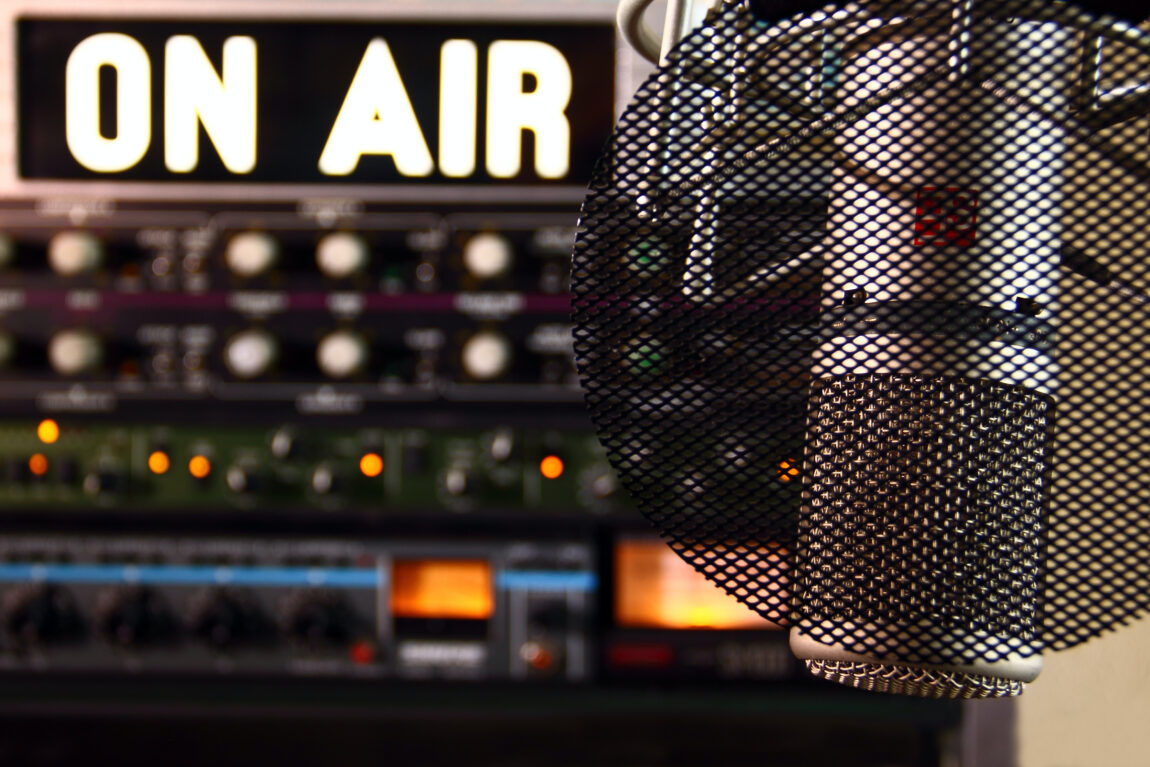
Close-up of a professional microphone with a pop filter in front of a glowing 'ON AIR' sign and audio equipment in a radio studio.

  • Don’t forget the DJs!

Maximising your chances of being blasted on the radio can be about covering all bases. DJs make the music world spin round and they are the people that will influence what’s on rotation through a show. Remember, there are always student radio shows or low-key online stations that are available to pitch to. Mainstream radio stations will have submission after submission flowing in 24/7. But, fanbases are found in every corner of our culture. Dig deep. You can find DJs, local or otherwise, to reach out to directly. Instagram, LinkedIn, and radio station contact lists are all good spots for finding direct contacts to reach out. ‘Music Director’, ‘DJ’, ‘Station Manager’… these kinds of keywords will get you on the right path.

  • Have A Press Kit On Hand

Once we’ve got your music out there, it’s more than likely that you’re going to get some attention from those almighty A&R teams. Catching the eye of a label, promotor or journalist is one of the goals here, and once you do you’re going to want to have an EPK (Electronic Press Kit) on hand. In fact, some radio stations will ask you to submit this with the track so they know what they’re talking about when it comes to airing. Honestly, this is what we do best, and Decent Music can help build this for you so you’re ready to go when you get that DM.

  • Use A Radio Plugger and Let The Airplay Roll In!

Radio plugging is no small feat. It takes a whole lot of time and energy. As a DIY musician, it’s likely that finding the time to successfully submit tracks to enough stations is gonna be tricky. That’s where radio pluggers come in. Having the contacts, experience, and clout is a massive bonus for hiring radio plugging services. Your chances of success skyrocket when hiring the pros.

Whether it’s building a fanbase, getting heard by the right industry professionals or just getting some top-notch content for your socials, radio plugging is a key part of any campaign. Whilst the era of the Spotify DJ and tailored playlists is well underway, the 49.5 million people absorbing the sound of their radio station each day is testament enough to the power radio airplay will have on your music’s reach. At Decent, we know how to get your song to the right people and get your music in the airwaves of the right stations. Check out our radio plugging services here.

Is It Worth Paying For A Music PR Agency?

So you’re an independent musician, in other words, you’re doing almost absolutely everything by yourself. You’re the songwriter, the label, the graphic designer, the producer, the videographer, god knows what else… Oh yeah! You’re the promoter, the publicist, the radio plugger, and the playlister. Oof, that’s a lot of plates spinning. But, on the road to becoming an established artist, there’s one particular plate that is so important that dropping it might just be make or break. Music marketing.

After spending hours in the studio and tweaking your tracks to be the best version of your sound, there’s nothing worse than letting a lackluster release ruin the chances of it getting heard. That’s where the publicists come in. Now… you might be thinking, “Well, what does a publicist do?” In general, music PR companies specialise in getting the word out to the public. Here at Decent Music, we offer a range of ways to help get your music out there, from digital publicity to radio plugging, to playlisting so there are loads of different avenues of music marketing to wander down. In this article, we will delve into the nitty gritty of how music PR can benefit you in your journey to making it big.

What Does Music PR Do For You?

“Aside from helping spread the word, whether that’s via press or radio, in purely logistical terms, it’s often far too time-consuming for a DIY artist to cover all the bases effectively themselves. That’s where the PR comes in.” – Geraint Jones of G Promo PR.

As a DIY musician, with all those plates spinning, paying for music PR is the right call when you need effective and proactive promotion for your project. Digital publicity is the main focus of a music marketing campaign and, quite honestly, unless you want to spend hours submitting pitch after pitch to blogs and playlist curators who might not even read the subject line let alone listen to your track, you need to let the pros do it for you. Music PR agencies will have their foot in the door at many of your favourite music magazines and if you want a shot at getting in there, employing a music PR company to help is probably the way to go.

Now, the next question you might be wondering is… “Why do I need to be on blogs? Doesn’t everyone find new music on TikTok anyways?” The answer is… absolutely! When labels, promotors, and A&R scouts fall in love with your sound and go to google you, you best believe you want that first page to be bursting with content spotlighting you. Call it clout, credibility or whatever you want, digital publicity is going to make you look legit. Search engine optimisation is infiltrating every aspect of digital publicity, and your own personal brand is no different. And to go back to the initial question, it may seem old school but, yes, online music magazines are a tried and tested way of getting your name out there and finding new audiences. And a great music PR team will get you on the exact ones to do just that.

It’s All In The Research

Sue Harris of Republic Media “It’s not just about acting as a messenger. A publicist can bring ideas and work with you to become the best artist you can be. It’s about experience. It’s knowing what works and doesn’t work.”

Okay, so we’ve covered “what does a publicist do?” But what about, how do you find one? There are a host of great music marketing companies out there, but finding the right one is key to amplifying your voice. Undertake some deep research into sourcing the right music PR, whether that’s mainstream or independent music PR. Often a smaller PR agency, with a proven track record of working within your artists of your genre and current exposure numbers will do much more for your career right now than a massive company spread too thin. At its heart, music PR is all about relations and you want to make sure you can have a great relationship with your music publicist. They’ll get to know you, understand your vision, and figure out the best ways to execute that. As Sue Harris hinted, the best music publicists will be able to help you become the best artist you can be and figure out how to market that in the digital landscape of advertising.

Should you pay for promises? F**k no! Like any industry, there are always people who will take advantage of those just starting out. Independent music PR can be no different. Be realistic about what your goals are and how close you are to getting there. Yes, you may want to be the cover of CLASH magazine (don’t we all?) but with one song out and one press shot you’ve got to be realistic as to how close you are to getting that slot. The best music PR company won’t promise you the stars and give you a handful of dust. They won’t promise you 100,000 streams and spam your Spotify with bots. They’ll respect you, your music, and your business. They’ll be realistic. There will be no bulls**t. And no bots. Ever.

You’ve Gotta Be Prepared!

When planning on working with a music PR company, you’ve got to plan ahead so they have ample time to do their thing. And do it well. There is no point in reaching out to a publicist a week before the release date and hoping for a miracle. You want to reach out at least a month or two before so that you can be sure you’re going with the right place and give that place enough time to generate the hype you want. No matter how great your track is, your publicist will need time to plan and execute your tailor-made strategy. There’s no point in paying for a rushed job.

Being prepared doesn’t just mean with your track. Be prepared for the exposure. Think about the bigger picture; focus on the right timing to put to use a music PR company. If it’s your first release, perhaps wait a while until you have a few songs out there to get the digital publicity they will offer you. Then, your newfound fans will have more content to love and stick around. Work on your social media exposure so that your new followers will have more to sink their teeth into. Book a couple of photoshoots so that you have a host of assets for your publicist to offer to online magazines. This doesn’t mean you have to be a perfectly polished artist before you recruit the help of a PR pro, but it will mean the publicity you gain from them will last even longer and run a bit deeper. When paying for your PR, you want it to have the best possible outcome. Having a solid foundation for the music PR company to bounce off will only mean your campaign can reach higher heights than before.

It’s All About The Hype

Music PR is all about building hype. Your upcoming release deserves just as much attention as you put into making the track. Through close connections with playlist curators, radio presenters, and magazine contributors music PR agencies can keep a plate spinning whilst giving you a hand free to focus on all the other aspects of being a DIY musician. Many independent musicians say that in itself is priceless. But, the call is up to you. Perhaps you want to work on your brand a bit more before reaching out or want another couple tracks stacking up your Spotify feed. Or, perhaps you’re ready to take the leap and let a music PR publicist do the heavy lifting for you. Only you as the artist can decide. At the end of the day, there are 60,000 new songs uploaded onto Spotify every day (according to MBW). When you’re ready, utilising the know-how of music PR publicists is a surefire way to not let your release fade into the background.